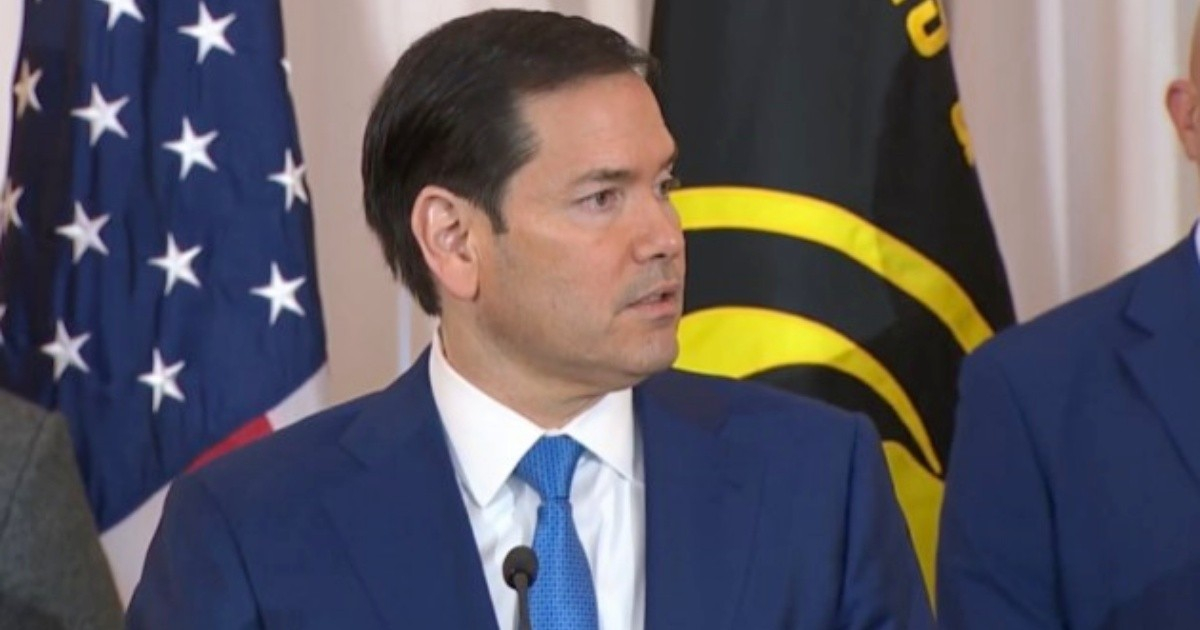
A leaked diplomatic cable from the State Department, revealed by The Nation magazine, uncovers instructions from Washington to its embassies to urge other nations to halt a planned UN debate on Cuba set for July 7.
This revelation has sparked international tensions and simultaneously provided the Cuban regime a fresh opportunity to bolster its narrative of external confrontation.
Diplomatic Pressure Unveiled
Dated July 1 and signed by Secretary of State Marco Rubio, the document outlines the United States' efforts to sway various countries' positions at the General Assembly. The incident highlights a recurring pattern: Havana uses each diplomatic conflict to distract from the internal crisis plaguing the island.
On July 2, The Nation published an article by journalists Peter Kornbluh and Ken Klippenstein detailing the cable's contents, classified as "Sensitive but Unclassified" (SBU). The three-page document, obtained by Klippenstein, is titled "Engaging UN member states on July 7 UN General Assembly open debate on Cuba."
Tailored Instructions for Different Nations
The investigation reveals the cable categorizes countries into three groups, each receiving specific directives. Washington's steadfast allies are urged to openly criticize the Cuban regime for its economic model, mismanagement, and corruption.
Non-aligned countries are advised to refrain from participating in the debate, while those traditionally supporting Havana are warned that the United States will closely monitor their positions. The document claims the annual resolution against the embargo has become a propaganda tool for the regime to avoid accountability. In this context, it deems an extraordinary new debate unnecessary.
Cuban Economy in Shambles and the Official Narrative
The cable asserts that Cuba's economy lacks a solid foundation, attributing its decline to incompetence and mismanagement. Concurrently, it states that the United States has offered $100 million in humanitarian aid, which, according to Washington, has been obstructed by Cuban authorities.
The Nation reports that this aid has been on the table for over a month, with its distribution contingent upon independent channels like non-governmental organizations and the Catholic Church, rather than state-controlled structures.
Meanwhile, Díaz-Canel recently admitted to the regime's mistakes but continued to emphasize the embargo as the primary cause of the crisis. This narrative deflects responsibility for the effects of a centralized economic model, lack of reforms, and political control.
Regime's Quick Reaction to the Leak
The regime swiftly exploited the leak. Foreign Minister Bruno Rodríguez Parrilla had previously accused the United States of exerting pressure, and after the cable's content was unveiled, Havana amplified this narrative in its official media.
Rodríguez claimed that Cuba poses no threat to the United States and labeled the embargo as a "crime against humanity." However, the Cuban government overlooks that despite over 30 consecutive UN votes against the sanctions, it has not implemented structural changes or improved human rights conditions.
The extraordinary session on July 7 will test Washington's diplomatic pressure capabilities. Meanwhile, millions of Cubans continue to endure a daily crisis, where the regime persists in prioritizing political control over real solutions.
Understanding the Impact of U.S. Diplomatic Pressure on Cuba
What was the purpose of the leaked diplomatic cable regarding Cuba?
The leaked cable instructed U.S. embassies to persuade other nations to stop a planned UN debate on Cuba, aiming to influence the international position on the island's political and economic issues.
How does the Cuban government use diplomatic conflicts to its advantage?
The Cuban regime often uses diplomatic clashes to divert attention from its internal crises, reinforcing its narrative of external confrontation and avoiding accountability for domestic issues.
Why does the U.S. oppose the UN debate on Cuba?
The U.S. considers the debate unnecessary, viewing it as a platform for Cuban propaganda that detracts from addressing the country's actual economic and political challenges.